
Globalization: The Challenges facing by the Developing Countries in the Education System
DOI:
https://doi.org/10.62019/jpvqks08Abstract
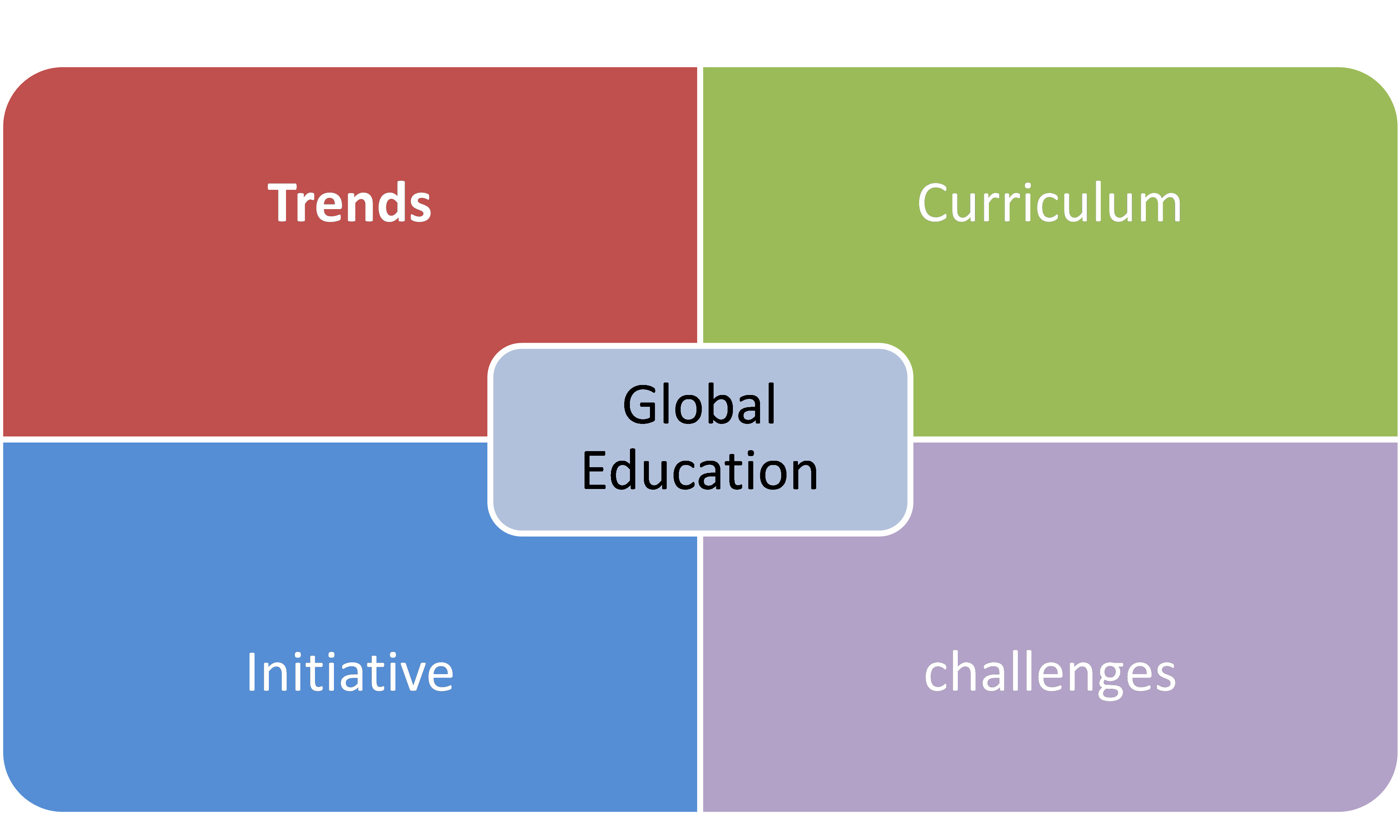
This is essential right of all people to get the quality education. It happens further crucial for all the people to fulfill the needs of learning beyond the limits of national institutes due to the changing trends challenges worldwide. The globalization is interconnection between the societies in the world. In this age, the digital technology plays a vital role. In which global people communicate and trade with one another. There are many challenges, opportunities and issues in this phenomenon as well. The less privileged people with poor economical conditions look this situation difficult. In this age of globalization where almost all field of life is affected there is the education that is facing numerous issues. The global education is multidimensional. It cane formal, informal and inclusive education. In the global citizenship, there are many factors are interconnected with all the people and the issues and problems are interlinked with one another. It is important and the right of all citizens to fulfill the need of learning. According to the thrust of learning and lack of ways of knowledge at the society level, the integration of education at the global society level play important role. The objectives of this study are to find the trends in global education, type of curriculum fit for global education and challenges in such type education system. This study is based on qualitative method through open ended questionnaire by interview. The target population and sample size consist of students of 4 departments from natural and social sciences from various disciplines in public sector university of Jamshoro Sindh. According to the nature and objectives of study the purposive sampling is implied. There are 20 participants of from different department both male and female students. This study found traditional methods of teaching and learning are adapted, there positive impacts and somewhere negative impacts in this type of education. It was found, there is no subject matter in curriculum regarding global education and there is fundamental need of such type of subject matter in the modern conditions.
References
Ahmad, N. R. (n.d.). International Journal of Business and Management Sciences. BigBio Researchers Publishers.
Ahmad, N. R. (n.d.). AI-enabled public governance in developing states: Service delivery gains, accountability risks, and a practical risk-based regulatory model. https://doi.org/10.52152/wja5db40
Ahmad, N. R. (n.d.). The impact of fintech startups on financial innovation and stability in Pakistan’s evolving financial landscape. Punjab Model Bazaars Management Company, Lahore.
Ahmad, N. R. (n.d.). Sustainable business strategies for achieving competitive advantage in Pakistan’s developing economy. https://doi.org/10.63878/qrjs361
Porter, M. E. (1985). Competitive advantage: Creating and sustaining superior performance. Free Press.
Wirtz, B. W., Weyerer, J. C., & Geyer, C. (2019). Artificial intelligence and the public sector—Applications and challenges. International Journal of Public Administration, 42(7), 596–615. https://doi.org/10.1080/01900692.2018.1498103
Doz, Y., & Kosonen, M. (2010). Embedding strategic agility: A leadership agenda for accelerating business model renewal. Long Range Planning, 43(2–3), 370–382. https://doi.org/10.1016/j.lrp.2009.07.006
Lee, I., & Shin, Y. J. (2018). Fintech: Ecosystem, business models, investment decisions, and challenges. Business Horizons, 61(1), 35–46. https://doi.org/10.1016/j.bushor.2017.09.003
Hart, S. L., & Dowell, G. (2011). A natural-resource-based view of the firm: Fifteen years after. Journal of Management, 37(5), 1464–1479. https://doi.org/10.1177/0149206310390219
Downloads
Published
Issue
Section
License
Copyright (c) 2026 Aijaz Ali Soomro, Saleem Ahmed Soomro, Tahir Hussain Soomro

This work is licensed under a Creative Commons Attribution-NonCommercial-NoDerivatives 4.0 International License.
How to Cite